Proven in women’s health
The strategy behind campaigns for UCSF and Hearing First.
-

Campaign
WISDOM Study
Repositioning breast health screening for a new generation of women.
-

Campaign
Starts Hear
Reaching expectant and new mothers on the urgency of newborn hearing.
The real barrier is trust.
Your data shows women who haven’t enrolled, screened, or shown up. Awareness only goes so far. Many have spent years being overlooked by health systems, and research links distrust of those systems to fewer screenings.
Women trust the people and places they already know. Your outreach should start there too.
What many women carry with them before they reach your program
Left out
Until 1993, U.S. law didn’t require women to be included in NIH-funded clinical research. Before then, women were often left out of the studies that shaped medical care.1
U.S. federal lawDiagnosed later
For 770 diseases, women were diagnosed about four years later than men, on average.2
6.9 million people · DenmarkMisdiagnosed
Women having a heart attack were 50% more likely than men to get the wrong first diagnosis.3
~600,000 patients · England & WalesWaited longer
Women with sudden abdominal pain waited 16 minutes longer than men for pain relief in the ER, even when they reported the same pain.4
981 patients · one U.S. ERScreened less
Women who distrust the health system are less likely to get Pap tests and breast exams.5
5,268 women · PhiladelphiaSee the details
- What it is
- U.S. federal law requiring women and minorities to be included in NIH-funded clinical research.
- Keep in mind
- Applies to NIH-funded research only, not every clinical trial.
See the study
- Who
- 6.9 million people in Danish national health registries, 1994–2015.
- What it measured
- Average age at diagnosis for women vs. men. Across the 770 diseases where women were diagnosed later, the gap averaged about 4 years (≈2.5 yrs for cancer, ≈4.5 yrs for metabolic diseases like diabetes).
- Keep in mind
- Danish population. For some diseases, men were diagnosed later.
See the study
- Who
- Nearly 600,000 heart attack patients at 243 NHS hospitals in England and Wales, 2004–2013.
- What it measured
- Whether the first hospital diagnosis matched the final one. It didn’t for 29.9% of all patients. Women were more likely to be misdiagnosed: +59% for STEMI, +41% for NSTEMI.
- Why it matters
- Patients first misdiagnosed had higher death rates and less often received recommended care.
See the study
- Who
- 981 adults with acute abdominal pain at one urban U.S. emergency department.
- What it measured
- Median wait for pain medication: 65 min for women vs. 49 min for men. Opioids given to 45% of women vs. 56% of men. Pain scores were similar.
- Keep in mind
- One hospital, one type of pain.
See the study
- Who
- 5,268 women aged 18+ in Philadelphia.
- What it measured
- Distrust of the health system’s competence was linked to fewer Pap tests; distrust of its values to fewer timely clinical breast exams. Results held after adjusting for demographic and socioeconomic factors.
- Keep in mind
- Shows a link, not proof of cause. One U.S. city.
From barrier to belonging.
Results you can take to your board.
Programs like yours, measured by who showed up.
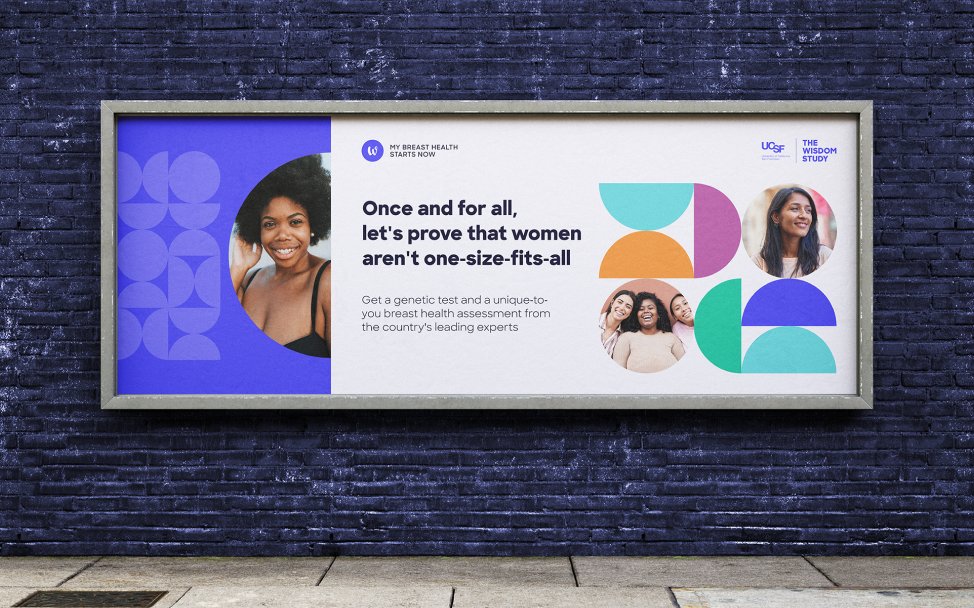
The strongest results came among racial minorities, a group health campaigns often overlook.
24M+ video views and 227M impressions put the message in front of them. The 25% shows it stuck.
“There aren’t enough good words in the dictionary to describe the stellar experience that I had with your team!”
Steffanie Goodman, MPH
Strategic Initiatives & Partnerships, The WISDOM Study
Four quick questions.
Answer yes or no. It takes about 30 seconds.
Question 1 of 4
Finish the quiz to unlock the one-pager.
What you can count on.
-
Partner
A partner who sees your audience as people with their own reasons and priorities.
-
Community
Your community's input before a single ad goes live.
-
Clear Answer
A clear answer to "did it work," backed by enrollment numbers.